
Why High Performing People Struggle With Vulnerability
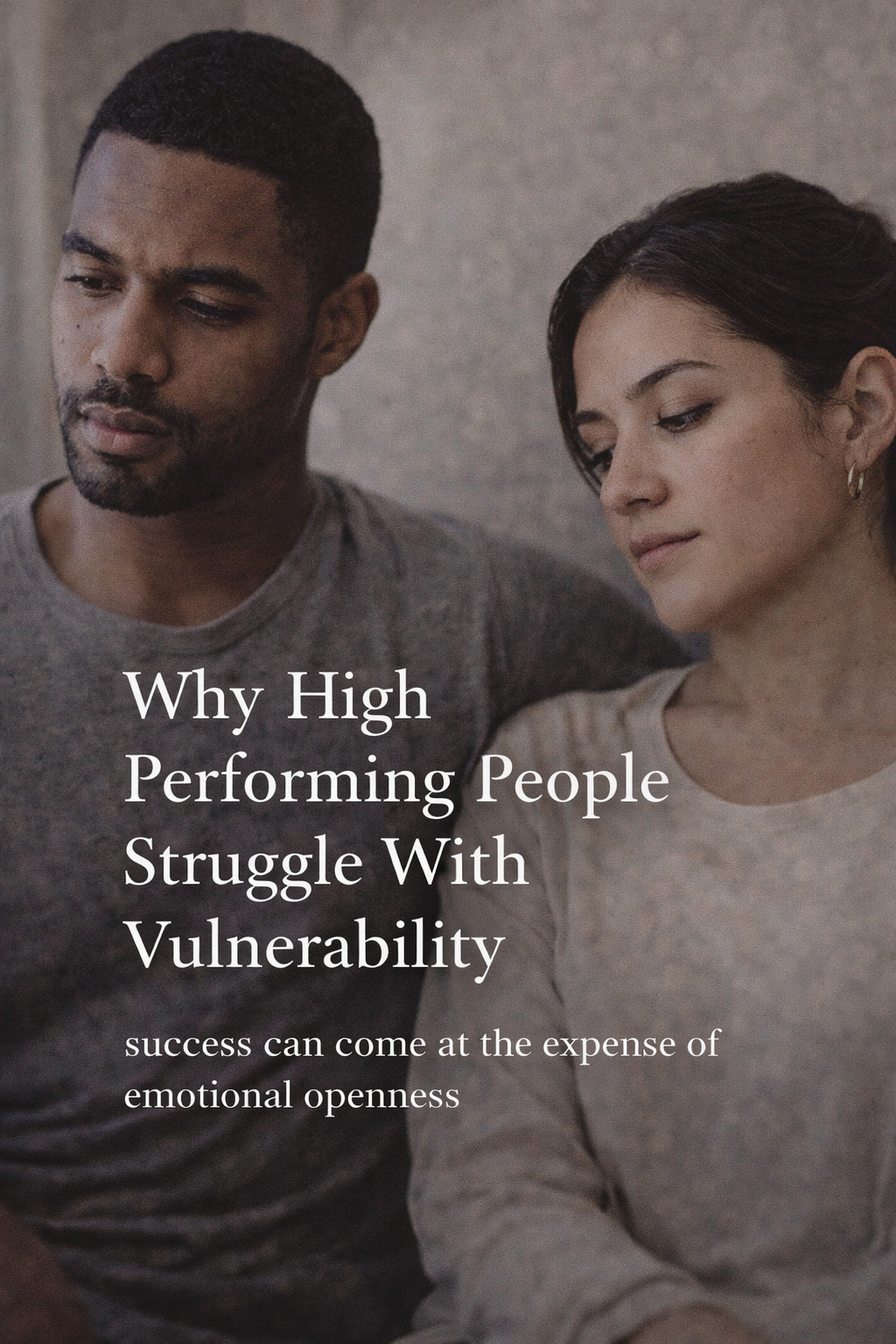
I see really frequently that we can be overdeveloped in one area to compensate for a lack in another.
This is because when we have a natural aptitude for something, we succeed more frequently, and progress faster and more easily. Our work pays off quickly as our competency keeps climbing, giving us dopamine - the hormone responsible for motivation and reward.
Learning a new skill requires fumbling. Being a beginner. There’s a vulnerability to it that feels heightened when we’re used to feeling extremely competent in other areas of our lives.
And for many high-performing people, vulnerability is exactly that.
The place where they feel least skilled. Least certain. Least in control.
When we spend a lifetime investing in one set of skills, we’re a lifetime behind in those we’ve neglected.
Being emotionally underdeveloped can lead to feelings of shame and confusion, as things happen in relationships that we don’t fully understand.
And vulnerability sits right at the centre of this.
Because vulnerability asks us to stay present with those feelings, rather than solving or escaping them.
To distance ourselves from the shame, rather than leaning in and learning more about what went wrong, the typical response is to pull away and return to our comfort zone - where we know we can win.
Men are particularly vulnerable to this dynamic because of societal and cultural norms that encourage them to suppress their feelings and ‘man up’.
Over time, this creates a gap.
They may be highly capable, successful, and respected in their external world - but when it comes to emotional openness, they’ve had very little practice.
Vulnerability becomes something that feels foreign, exposing, and even threatening. Vulnerability isn’t a personality trait. It’s a capacity that’s buildable.
The inevitable problem with this - that many successful men come to realise - is that a lack of emotional depth becomes a kind of ticking time bomb in relationships.
Because intimacy requires vulnerability.
Not as a performance, but as a willingness to be seen.
Women are emotionally wired and often require a degree of emotional presence that asks a man to step out of his comfort zone.
Not to become someone else, but to access parts of himself that have been neglected.
In this way, relationships often become a space that invites growth.
We are drawn, often unconsciously, to people who will challenge us to expand - if we’re willing to do the work.
Sometimes we disconnect emotionally because the demands of intimacy feel too great.
We can feel smothered, overwhelmed, or unsure how to meet what’s being asked.
This is especially true for avoidant attachment styles, where closeness can feel like a threat rather than a desire.
And so vulnerability is avoided.
Not because it isn’t wanted.
But because it doesn’t yet feel safe.
Learning how to feel safe enough to open - and to stay connected to yourself while doing so - is something that can be developed over time.
